Don’t Water The Pavement! Inspect, Adjust, and Replace Inefficient Lawn Sprinkler Systems
 June 17, 2026
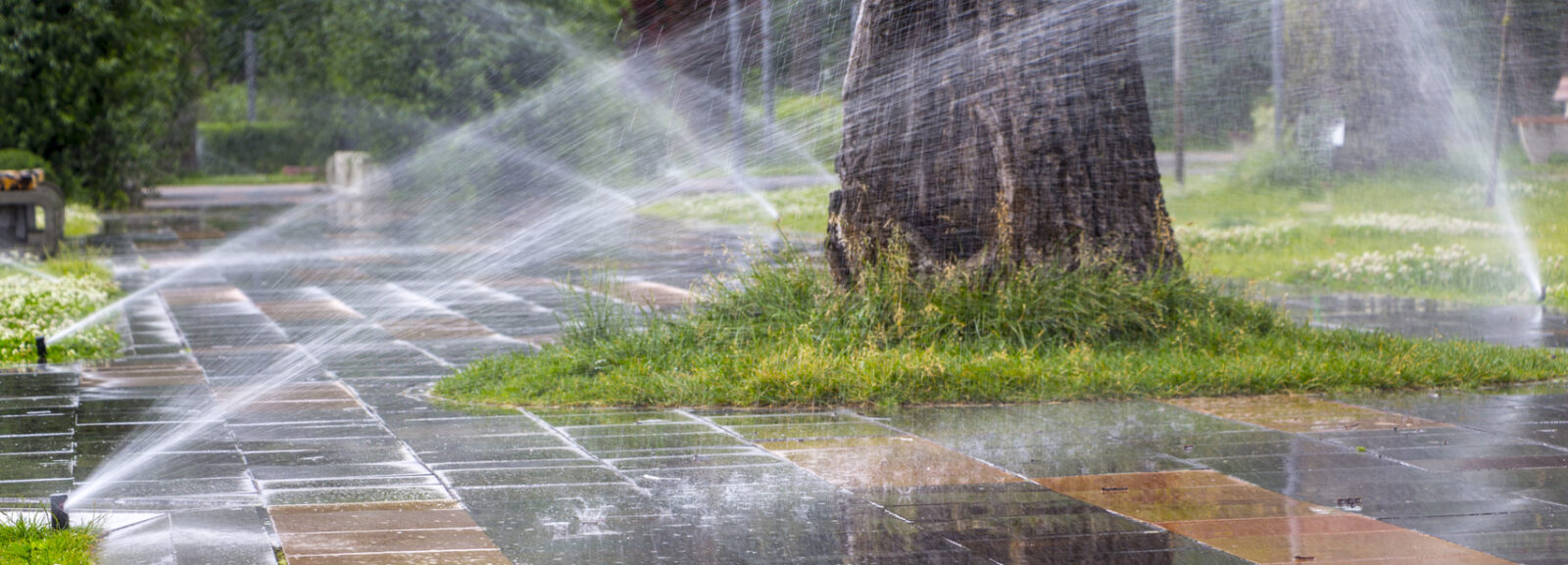
Are your lawn sprinklers running when it’s raining? Are they watering the road, or spraying up into the air in the middle of the afternoon?
Then you’re wasting a lot of water (and money)!
The fact is, the majority of sprinkler systems are inefficient. They run when daytime heat evaporates water before it can soak into the soil, instead of at night when it can be absorbed. They spray down the streets and sidewalks. They run in the middle of a rainstorm. Or water runs off, pools and creates soggy spots in some areas, missing others entirely.
And many sprinklers leak. A lot. The EPA estimates “a household with an automatic landscape irrigation system that isn’t properly maintained and operated can waste up to 25,000 gallons of water” every year.
That’s right. Up to 25,000 gallons — more than the volume of an average in-ground swimming pool!
And the numbers show that even homes with timer-controlled irrigation systems use about 50 percent more water outdoors than homes without irrigation systems.
That’s why it’s important to ensure sprinkler systems are programmed correctly; sprinkler heads are all pointed in the right direction; the heads aren’t clogged or damaged; drip irrigation systems are properly positioned; leaks are repaired, and old, inefficient sprinkler systems are updated with newer models using a WaterSense controller.
And as the Lehigh Valley sees more drought warnings and drought watches, this is especially important to help conserve water.
So instead of watering the streets and sidewalks (it doesn’t help them grow!), check out the EPA’s Sprinkler Spruce Up tips below to ensure your sprinkler system is as efficient as possible. (Better yet, ditch the notion of an unnaturally green lawn and embrace a more natural solution instead.)
Inspect For Breaks and Leaks

Missing or broken sprinkler heads can be hard to find because most irrigation systems run overnight or early in the morning. Running an irrigation system with broken and damaged sprinkler heads can cause overflowing and water flooding the landscape.
To make it easier, WaterSense has a downloadable checklist to help you walk through each zone of your irrigation system and inspect for signs of water waste. Among their tips for your sprinkler spruce up:
- Look for heads that do not pop up fully or are tilted as they can unexpectedly spray to the wrong areas.
- If you find a broken head, place a flag next to the broken sprinkler so you will be able to work on it later. You may be able to fix broken heads yourself, but if you are unsure, go with a pro — notify an irrigation professional certified by a WaterSense labeled program, and they can replace your broken sprinkler heads.
Connect Sprinklers, Pipes, and Valves
Leaks can occur at the joints between sprinklers and the piping. Leaking joints can also be a sign of too much water pressure or particles in the water. Check that your pressure regulator is installed properly. (For more tips on identifying and fixing household leaks, check out the Fix-a-Leak Week campaign.)
Between irrigation cycles, look for areas of the landscape with water pooling on the surface; that could be a sign of an underground leak. Check the connections inside valve boxes to make sure all the valves and other components are securely connected and that the valves can shut. If the valves are not able to close completely, your irrigation system could slowly seep water even when it is turned off.

Direct Sprinklers For Best Water Coverage

Are you watering the driveway, house, street or sidewalk instead of your yard? Irrigation water that lands on hardscapes goes to the stormwater drain instead of the landscape. It also creates a dangerous situation for drivers—especially motorcyclists.
Any sprinklers that are spraying onto driveways, sidewalks, or walls should be turned toward the landscape. The sprinkler can be adjusted to as wide or as narrow a field as necessary.
For best results:
- Each sprinkler should be able to reach the sprinkler head next to it, known as head-to-head coverage.
- Make sure to properly direct sprinkler for uniform coverage to avoid dry spots in the landscape.
- Avoid overspraying or misting due to high pressure. Consider installing spray sprinkler bodies with integral pressure regulation which maintain consistent water pressure so that nozzles can operate efficiently.
Select a WaterSense Labeled Irrigation Controller
A WaterSense labeled irrigation controller uses local weather and landscape conditions to automatically adjust your irrigation schedule based on your location, size of your landscape, and scheduled days to irrigate.
Irrigation controllers have intuitive programming controls to schedule irrigation based on the plant water requirement.
If you notice that runoff occurs when you run your irrigation system long enough to meet the plant water requirement, consider breaking up the irrigation into smaller intervals.
Short intervals of irrigation with breaks in between to allow the water to seep into the soil is called cycle-and-soak. Cycle-and-soak promotes deeper watering and deeper root growth of the plants.
A proper sprinkler spruce up will keep your lawn and garden green — and keep more green in your wallet.
